Blog

- February 19, 2026

Can the mental health benefits of exercise be bottled?

We all know the feeling: the mental clarity that comes after a good run or a heavy workout. Science backs this up, even showing that for non-severe depression, exercise can be just as effective as antidepressants or therapy. But there is a cruel irony at play: the symptoms of depression, such as low energy and lack of motivation, are often the very things that can stop people from moving.

Read More »

Could ‘cyborg’ transplants replace pancreatic tissue damaged by diabetes?

A new electronic implant system can help lab-grown pancreatic cells mature and function properly, potentially providing a basis for novel, cell-based therapies for diabetes. The approach, developed by researchers at the Perelman School of Medicine at the University of Pennsylvania and the School of Engineering and Applied Sciences at Harvard University, incorporates an ultrathin mesh of conductive wires into growing pancreatic tissue, according to a study published in Science.

Read More »

Newly discovered virus linked to colorectal cancer

Now, researchers from the University of Southern Denmark and Odense University Hospital have discovered a previously undescribed virus in a common gut bacterium. The virus appears more frequently in patients with colorectal cancer. The study is published in the journal Communications Medicine.

Read More »

Blood test ‘clocks’ can predict when Alzheimer’s symptoms will start

Researchers at Washington University School of Medicine in St. Louis have developed a method to predict when someone is likely to develop symptoms of Alzheimer’s disease using a single blood test. In a study published in Nature Medicine, the researchers demonstrated that their models predicted the onset of Alzheimer’s symptoms within a margin of three to four years.

Read More »

AI tool debuts with better genomic predictions and explanations

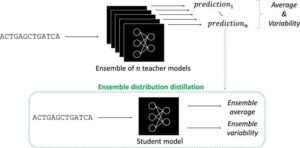
Artificial intelligence has taken the world by storm. In biology, AI tools called deep neural networks (DNNs) have proven invaluable for predicting the results of genomic experiments. Their usefulness has these tools poised to set the stage for efficient, AI-guided research and potentially lifesaving discoveries—if scientists can work out the kinks. The findings are published in the journal npj Artificial Intelligence.

Read More »