
GE HealthCare secures FDA 510(k) clearance for diagnostic viewer
View offers 2D and 3D visualisation, along with AI-based tools, to assist in clinical decision making.

View offers 2D and 3D visualisation, along with AI-based tools, to assist in clinical decision making.

OncoPatch announced today that it received FDA 510(k) for its Oncopatch Surface brachytherapy system for treating localized tumors.

MiniMed (Nasdaq:MMED) announced that it received CE mark for the use of its MiniMed 780G with the Instinct sensor made by Abbott.
Matthew Jones is using experimental technology and computation to decode the molecular processes that underlie the way tumors evolve to resist treatment by pinpointing how and when aggressive mutations arise.
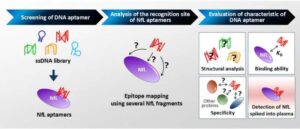
Leveraging the potential of NfL as a biomarker, researchers from Japan have developed the world’s first aptamer (tiny, single-stranded synthetic DNA molecules) that can bind NfL with high affinity and specificity
Researchers at the Indiana University Melvin and Bren Simon Comprehensive Cancer Center have found that depleting a clotting protein made by the liver could slow down pancreatic cancer.
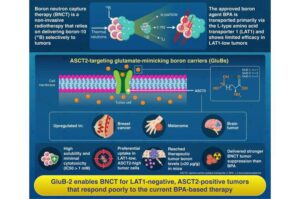
Boron agents termed GluBs, developed by Science Tokyo researchers, have overcome a key limitation in cancer therapy by entering tumor cells through a pathway that standard drugs cannot use.
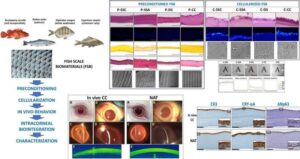
Now, researchers from the Tissue Engineering Group of the Department of Histology at the University of Granada’s Faculty of Medicine and the ibs.GRANADA Institute for Biomedical Research have created highly biocompatible, resistant, and transparent corneal implants from scales of various types of fish commonly found on the market, such as carp. The findings are published in the journal Materials & Design.
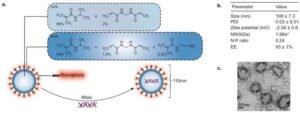
Cancer cells consume oxygen and nutrients at a higher rate than healthy tissue,. This drug delivery system senses those physical changes and guides medicine to the disease. The drug is released only when it encounters those tumor-specific conditions.
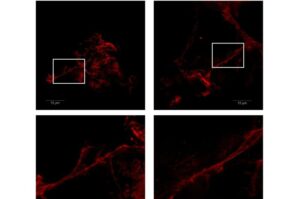
A new study led by researchers from VIB and KU Leuven shows that immune cells called microglia can actively promote the formation of plaques in Alzheimer’s disease.