
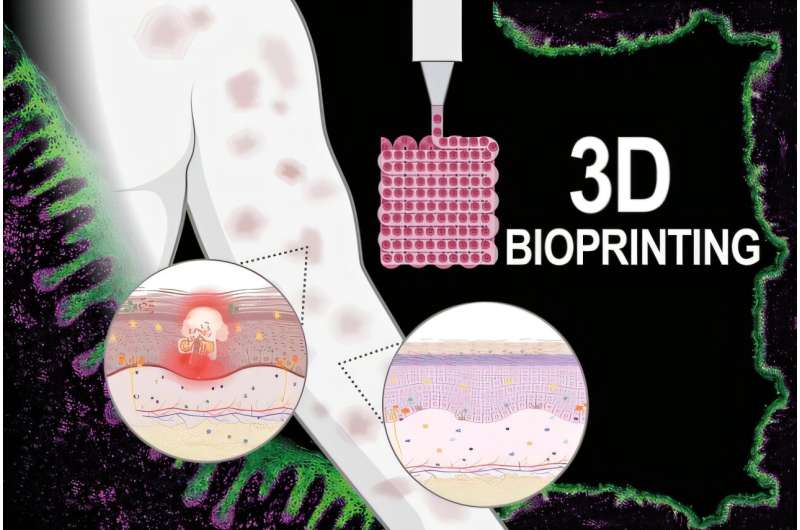
Roughly one-quarter of Europe’s population suffers from chronic inflammatory skin diseases such as psoriasis, eczema, or acne. Developing new therapies for these conditions is often difficult. Animal experiments—aside from their ethical concerns—frequently fail to produce reliable results, because animal skin differs greatly from human skin in both its anatomy and immune response.
The so-called in vitro models are therefore needed to study skin diseases in laboratory conditions. A substantial challenge on the way to this goal—such models have to be immunocompetent, i.e., include all the necessary immune cells in order to mimic the situation in the real skin. The recent collaboration between the TU Wien and the Medical University of Vienna explored how 3D bioprinting with biomaterials could fill this gap. This work is presented in a newly published review article in Advanced Healthcare Materials.