
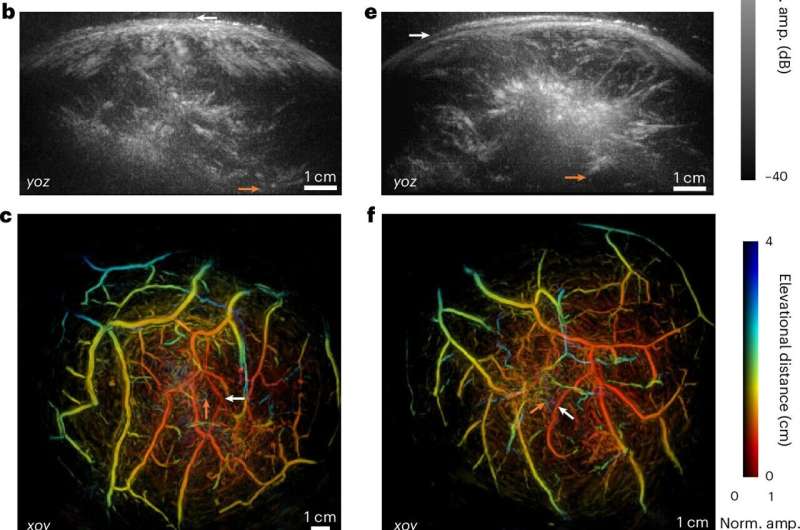
The technology combines ultrasound and photoacoustic imaging, which detects sound waves generated by light, to simultaneously collect images of both tissue and blood vessels. The findings, published in the journal Nature Biomedical Engineering, have the potential to address current gaps in medical imaging.
Imaging is a critical part of modern medicine, informing care across injury, infection, cancer, chronic disease and more. But today’s gold standard techniques—ultrasound, X-ray, computed tomography (CT) and magnetic resonance imaging (MRI)—each have their limitations. These include cost and time required for each scan, as well as what the images can capture—how much of the body can be seen at once, how deep images can reach and how much detail they provide.