
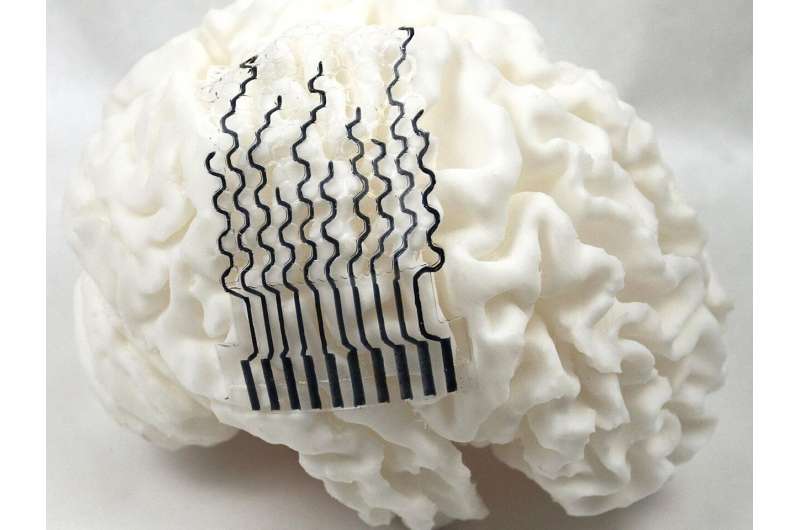
Neural interfaces are powered by tiny sensors capable of tracking biophysical signals, known as bioelectrodes. These sensors are usually made from stiff materials in a one-size-fits-all design that struggles to match the brain’s complex structure. The researchers have created a novel approach to 3D printing bioelectrodes that can stretch and morph to fit the minor differences that make every brain unique.
Simulating unique brain structures
The team used software to simulate detailed brains based on MRI scans taken from 21 human patients, shaping a set of electrodes tailored for brains’ specific structures before 3D printing the electrodes and models of the brains. In a paper published in Advanced Materials, they reported that their electrodes better fit the structure of the brain than traditional designs, while remaining effective and biologically compatible, even in tests done in rats.