
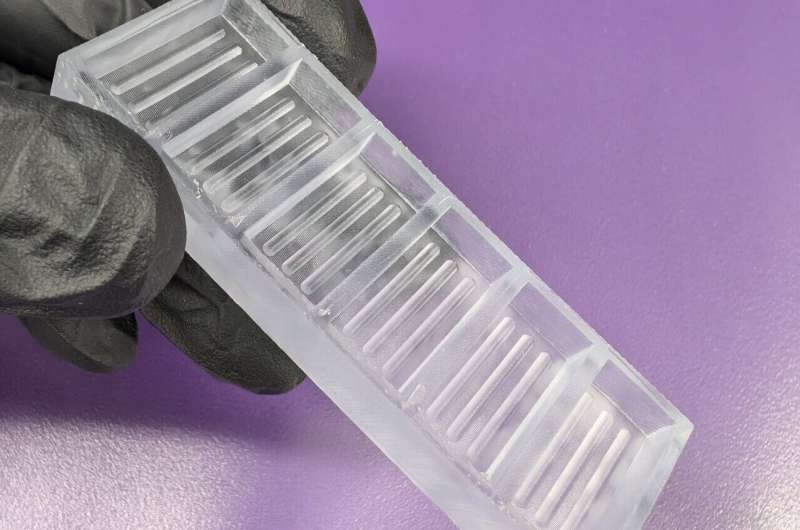
This improved technology could help accelerate production of human mini-organ tissues that are large enough to be useful in patching damage or restoring diminished functions of a person’s small intestine, stomach or colon. Such tissues also would be valuable for future disease studies and to more accurately evaluate organ damage risks linked to oral medications.
Details of the project were published, in Nature Biomedical Engineering. The new production system was designed and tested by a team led by staff investigator Holly Poling, Ph.D., senior author Maxime Mahe, Ph.D., and a team of 17 other scientists from Cincinnati Children’s and Nantes Université in France.