
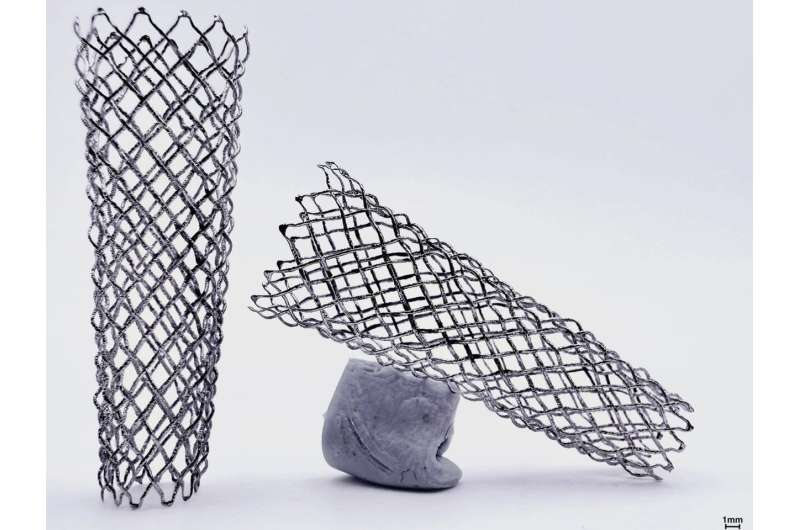
This research, published in npj Metamaterials, also involved researchers from the Massachusetts Institute of Technology (MIT) and the University of Galway, and enables the design and manufacture of highly flexible braided structures in a single production step.
The technology has already been patented, and its potential has been recognized with the National James Dyson Award.
These structures mimic blood vessels and can be compressed without failure, enabling their delivery through a catheter.