
Associate Professor Trevor Steward, Director of the Brain and Mental Health Hub at the University of Melbourne, said people with PTSD often get stuck in negative thoughts about themselves and the world.
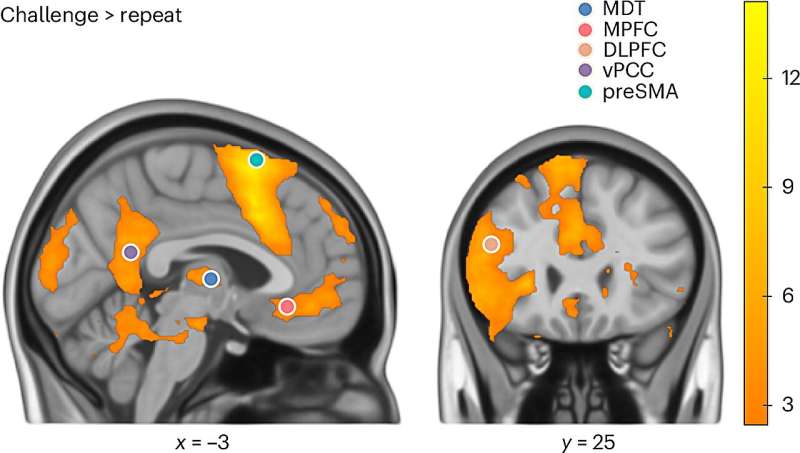
“Therapy helps patients challenge those thoughts through a cognitive behavioral therapy technique called cognitive restructuring, where you identify and change negative and irrational thoughts. However, until now, nobody knew what was happening in the brain when they try to do this,” he said.
“We’ve identified a specific brain circuit involved in this process, in people with PTSD, which showed that the brain’s control center was worse at regulating a deep relay hub called the thalamus.