
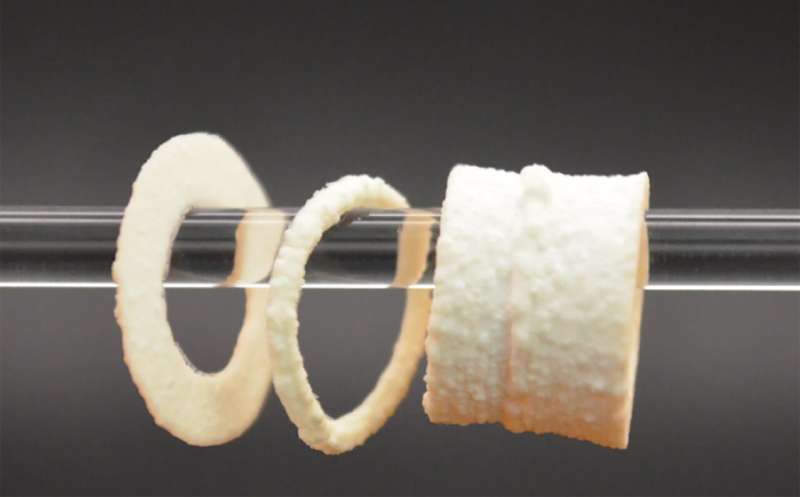
A bone-like composite developed at EPFL uses naturally occurring enzymes to accelerate mineralization through an energy-efficient, room-temperature process. The strong, lightweight material shows promise for bone repair applications.
Inspired by the resilient and self-repairing mechanical properties of bone, scientists have been developing synthetic materials using one of bone’s main components: a mineral called hydroxyapatite (HA). However, the high-temperature processes typically required to produce HA-based materials use significant energy and restrict the use of biologically active components, like enzymes, to promote bone growth.