
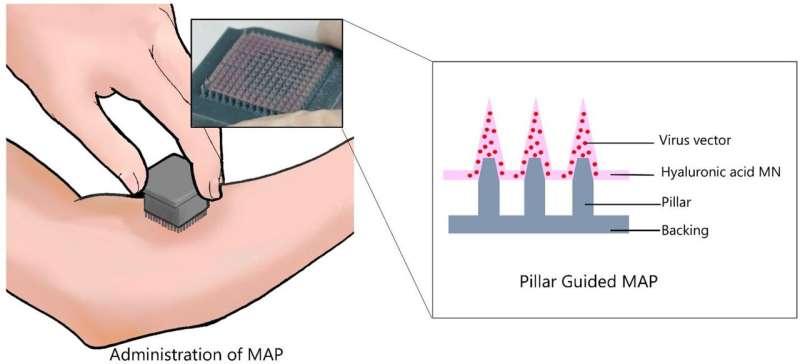
Conventional vaccination methods require skilled medical personnel to administer them, which can delay mass immunization efforts. Microneedle array patches (MAPs) are a promising alternative to standard vaccines, as they are painless, more stable at room temperature, and can be self-administered.
“MAPs are made by pouring a viral solution into a mold that shapes it into an array of tiny needles as it dries,” says lead author of the study Kotaro Shobayashi. “When the patch is applied to the skin, these microneedles dissolve, delivering the vaccine to the patient.”