
A BCI is technology that allows a human to control a computer with brain activity. Historically, they have not been effective. BCIs built using real-time neurofeedback from fMRI—a type of MRI scan showing which areas of the brain are most active over time—require up to 10 long training sessions per person, and even then the learning effects are modest. About a third of users never gain control, regardless of how many hours they practice.
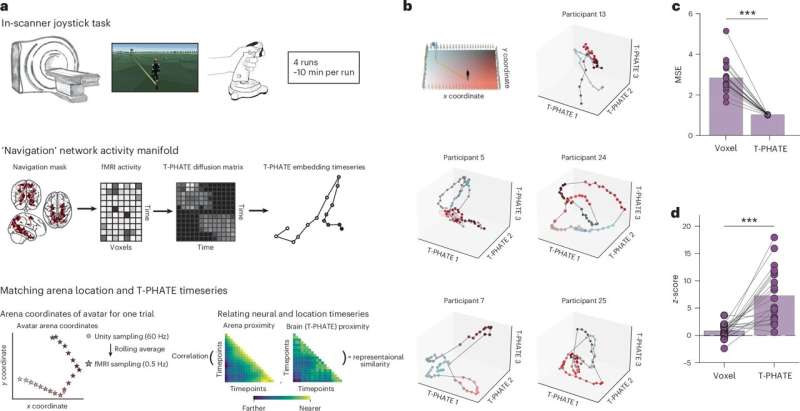
Activity in the brain travels along well-worn routes. Working with those routes, rather than against them, was the key to learning how to use a BCI, the researchers found. When a BCI is built around these routes, people gain rapid control, and their brain activity reorganizes to support the learning. A BCI that ignores this natural geometry, by contrast, produces little or no learning.