
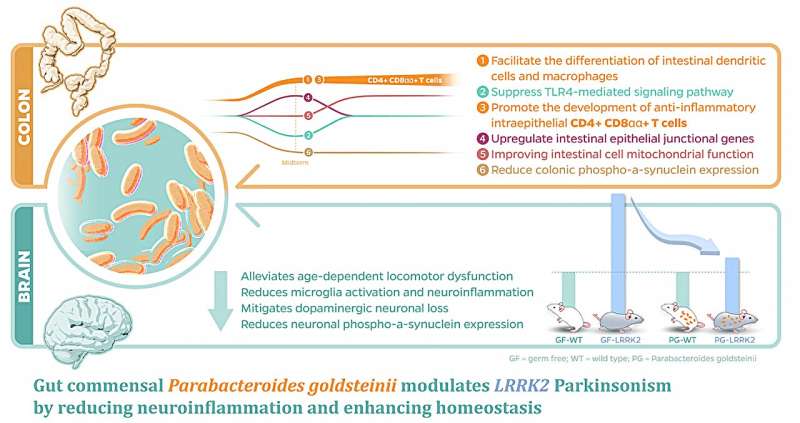
A team at National Taiwan University and National Taiwan University Hospital, working with colleagues at Chang Gung University and the National Laboratory Animal Center, has now tested that idea directly. They studied mice carrying G2019S, a mutation in a gene called LRRK2 that is one of the most common inherited risk factors for Parkinson’s disease—and that also raises the risk of inflammatory bowel disease.
The mice were raised completely germ-free, so the researchers could control exactly which bacteria entered their guts. The study is published in the Journal of Advanced Research.