
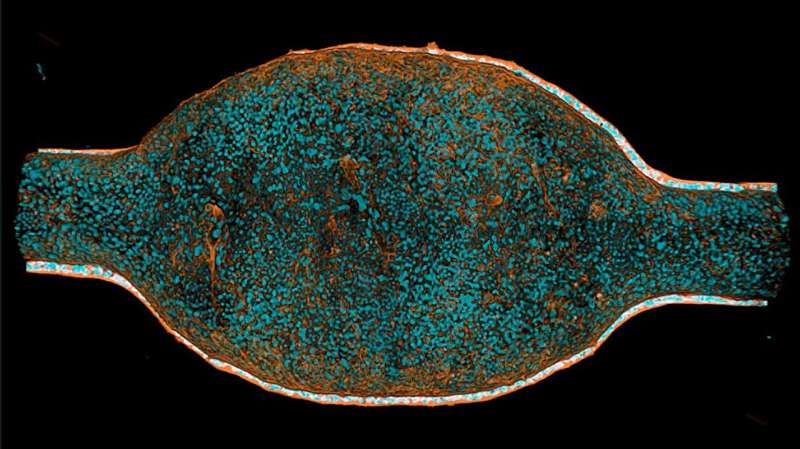
The bladder is not just a static storage bag; its lining stretches, relaxes, and stays in constant contact with urine whose composition changes with hydration, diet, and disease. Urine can vary widely in salt and solute concentration, and studies on animals have shown that concentrated urine can damage the bladder lining. But how exactly that happens is unclear.
UTIs impact more than 400 million people worldwide every year. Most recurrent urinary tract infections (UTIs) are caused by a bacterium, “uropathogenic Escherichia coli,” or UPEC. These bacteria can live in urine, stick to bladder cells, and invade the bladder tissue. Some forms can even hide inside cells or enter dormant states that make them harder to kill. And so far, there has been no human model able to capture the full interaction between urine, bladder tissue, and bacteria over time.