
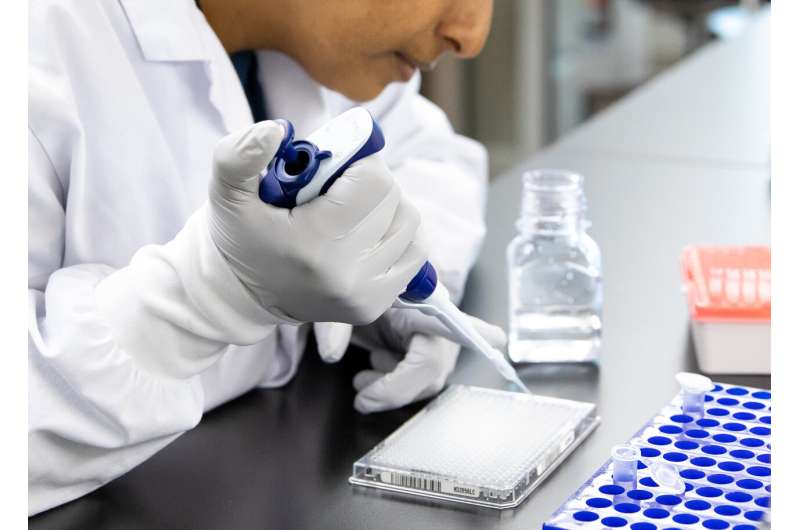
A Toronto team of researchers focused on basal-like breast cancer (BLBC) developed a new gene-editing tool that allowed them, for the first time, to map the genetic drivers of this most aggressive and hardest-to-treat form of the disease.
Published in Nature, the study was led by Dr. Daniel Schramek, deputy director of discovery research at Sinai Health and senior investigator at the Lunenfeld-Tanenbaum Research Institute (LTRI), along with Dr. Khalid Al-Zahrani, formerly a postdoctoral fellow at LTRI and now a faculty member at the Donnelly Center for Cellular and Biomolecular Research at the University of Toronto (U of T).