
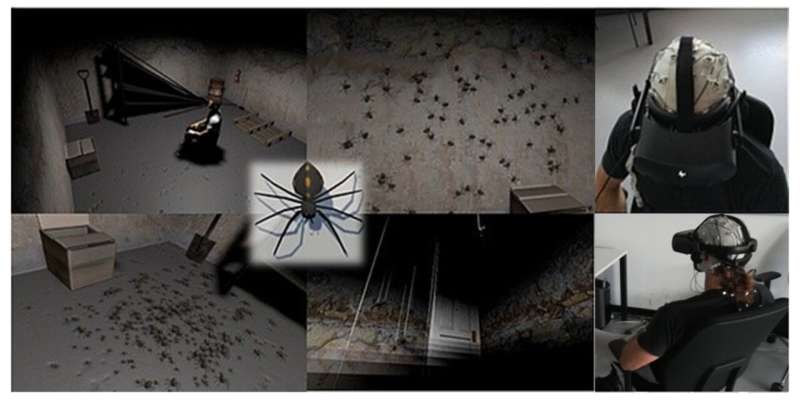
The “VRSpi” system is a prototype which analyzes the EEG data and heart rate of the participants during a confrontation with spiders in a VR environment. Based on this objective measurement data, it adjusts the intensity of the stimuli in real time to the person’s current level of anxiety. This avoids over- or under-stimulation and optimizes the effectiveness of the exposure in order to get the users used to the creatures.
A fear of spiders is one of the most common specific phobias. Exposure therapy is an effective treatment. Those affected are gradually confronted with the fear-inducing stimulus in order to achieve habituation.