
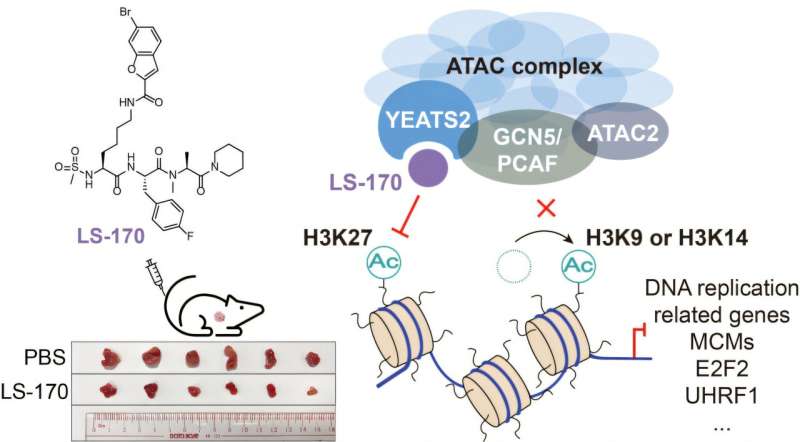
The findings were published in Nature Chemical Biology, and multiple international patent applications have been filed. The team was led by Professor Xiang David Li from the Department of Chemistry at The University of Hong Kong (HKU), in collaboration with researchers from the Shenzhen Bay Laboratory and Tsinghua University.
Histone modifications as genetic switches in cells
Inside human cells, DNA is wrapped around protein structures called histones to form chromatin. Chemical modifications on histones function like genetic “switches,” determining whether genes are turned on or remain silent.
Among these modifications, histone acetylation is one of the most important “on” switches that activate gene expression. This modification is catalyzed by enzyme complexes known as histone acetyltransferases (HATs).