
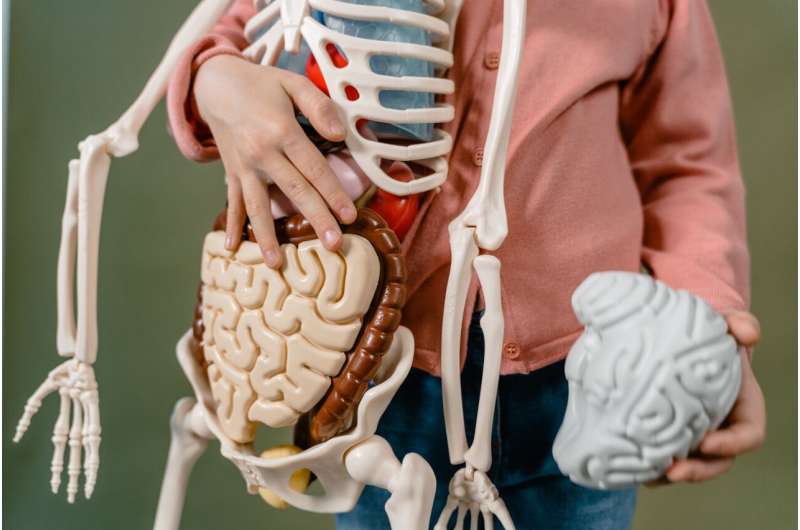
Nearly 10 years ago, researchers led by University of Wisconsin–Madison professors Barbara Bendlin and Federico Rey discovered that the communities of microbes living in the intestines of Alzheimer’s disease patients differ from those of healthy people.
“Since then, we’ve been trying to figure out how this difference in the gut perhaps leads to changes in the brain,” says Bendlin, a professor of gerontology in the UW School of Medicine and Public Health.
A gut compound tied to brain damage
In the study, Bendlin, Rey and collaborators show that a compound called imidazole propionate (ImP)—produced in the gut by some types of bacteria—plays an important role in brain changes that result in Alzheimer’s disease and related cases of dementia. Some people have guts that seem to produce a lot of ImP; some people don’t.