
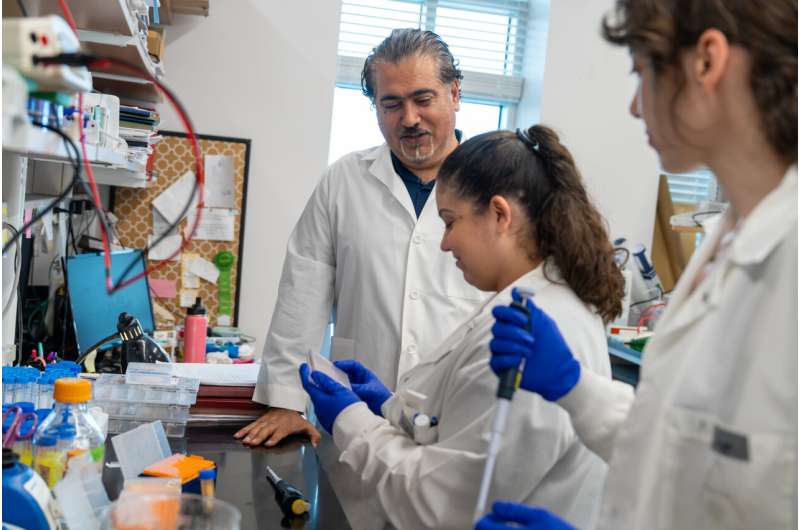
Now, researchers at MUSC Hollings Cancer Center have uncovered one of the mechanisms behind that resistance and a potential way to reverse it.
In a new study published in Cell Reports Medicine, the team discovered an unexpected role for a protein called lysyl oxidase, or LOX, inside TNBC cells. Blocking LOX disrupted several processes the cancer depends on, creating a weakness that researchers then exploited with a second drug.
The combination significantly blocked tumor growth in multiple preclinical models of TNBC—and did so without chemotherapy. This is important because chemotherapy is often associated with adverse effects, and tumors can continue growing in the clinic. The new strategy offers a way to target chemoresistant tumors by first creating a weakness and then exploiting it to close the escape route tumor cells use to survive.