
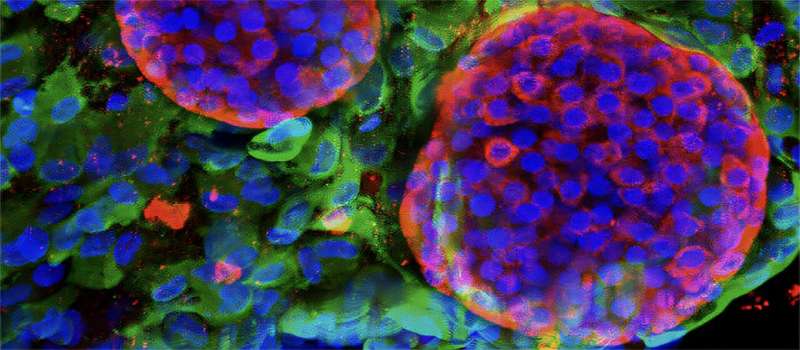
Using an innovative hydrogel that supports insulin-producing cells once transplanted into the body, the team successfully regulated blood sugar levels in diabetic mice. This experimental success goes beyond conventional transplantation methods and opens the door to developing a bioartificial pancreas that could eliminate the need for insulin injections. The results are published in the journal Trends in Biotechnology.
Type 1 diabetes happens when the immune system destroys the insulin-producing β cells in the pancreas, causing blood sugar levels to become chronically unbalanced. People with this condition must inject insulin every day for life. Transplanting pancreatic islets—small clusters of insulin- and other hormone-producing cells—can temporarily restore blood sugar control and eliminate the need for insulin injections.
However, this method is limited by the shortage of donors and a high risk of rejection. In addition, when islets are infused into the liver—the standard transplant site—they suffer from inflammation, loss of their natural support matrix, and poor blood supply, all of which compromise their survival.