
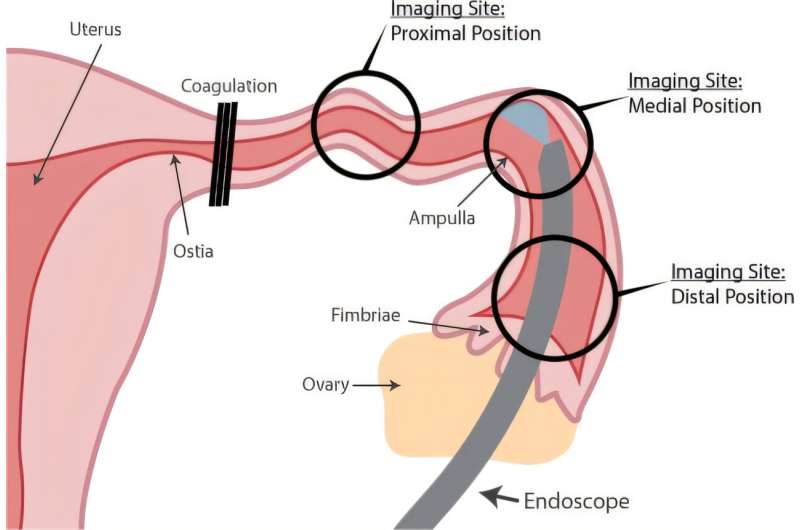
In a study published in Biophotonics Discovery, researchers describe a redesigned endoscope built to image the inside of the fallopian tubes and collect cells at the same time. The device, known as a cell‑acquiring fallopian endoscope (CAFE) is small enough to navigate the tight, winding tube while capturing optical signals and cellular samples associated with early disease. Tested in intact human tissue, the system demonstrates how combined imaging and cell collection could support future strategies for earlier ovarian cancer detection.
Looking upstream for cancer origins
Most ovarian cancers are classified as high‑grade serous carcinomas. A growing body of evidence shows that many of these cancers originate as precursor lesions in the fallopian tubes. These early lesions can persist for years before cancer spreads, offering a potential window for detection.