
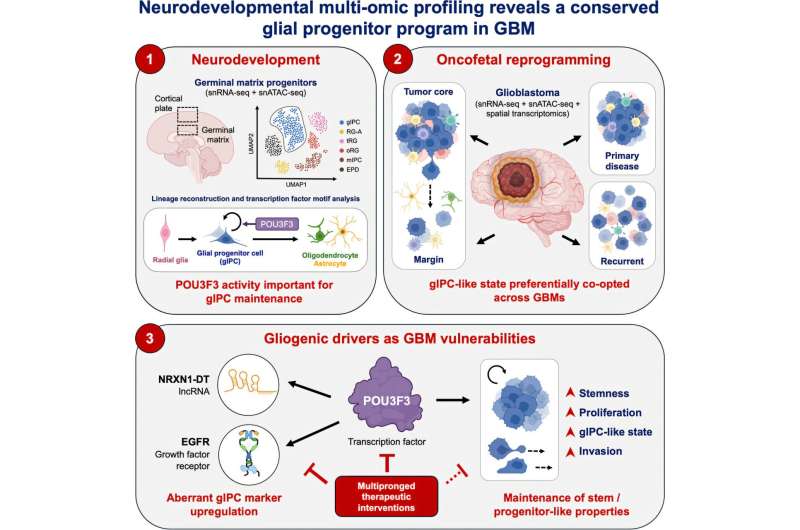
The study, published online Nov. 11 in Neuron, found that many glioblastoma cells resemble glial intermediate progenitor cells (gIPCs), immature cells involved in brain development. Researchers identified POU3F3, a protein that regulates gene activity, as an important factor in maintaining this resemblance. In patient-derived tumor cell models, reducing POU3F3 activity made tumor cells less aggressive, suggesting a potential direction for future drug development.
“Glioblastoma is a devastating disease, and current treatments have limited success. One of the biggest challenges is that these tumors are made up of many different types of cancer cells, making them difficult to eliminate,” said Nadejda (Nadia) Tsankova, M.D., Ph.D., professor of pathology and laboratory medicine and neuroscience, and director of neuropathology at the Icahn School of Medicine at Mount Sinai.