
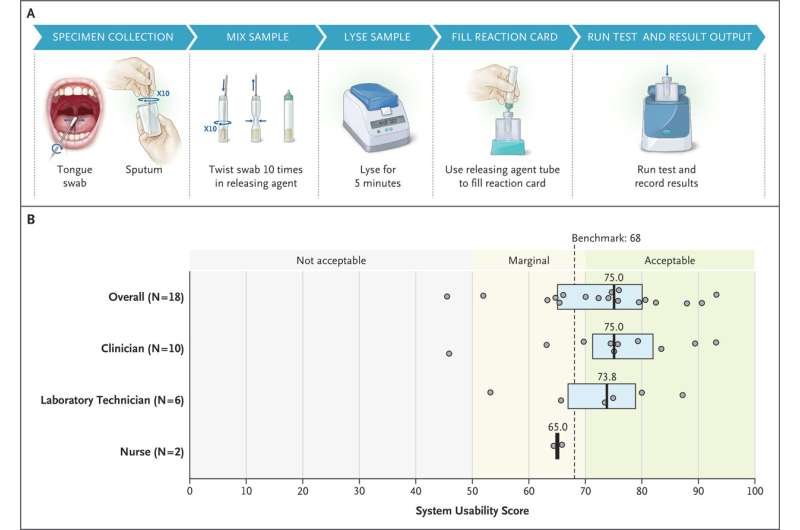
The method enables detection of Mycobacterium tuberculosis without laboratory infrastructure, within a markedly shorter time frame than conventional diagnostics, and using a simple swab. The test demonstrated high diagnostic accuracy as well as feasibility for use by minimally trained personnel.
The results, published in the New England Journal of Medicine, make a significant contribution to the World Health Organization’s decision to already recommend the global use of the diagnostic method.
Using the new method, tuberculosis bacteria can be detected directly at the site of sample collection via a tongue or sputum swab, with results available in under 35 minutes. Diagnostics rely on two portable devices: One device lyses bacterial cells in the swab sample to release genetic material, while the second device performs molecular detection and indicates the result through visual signal lights as either positive (presence of bacterial DNA) or negative (absence of bacterial DNA).