
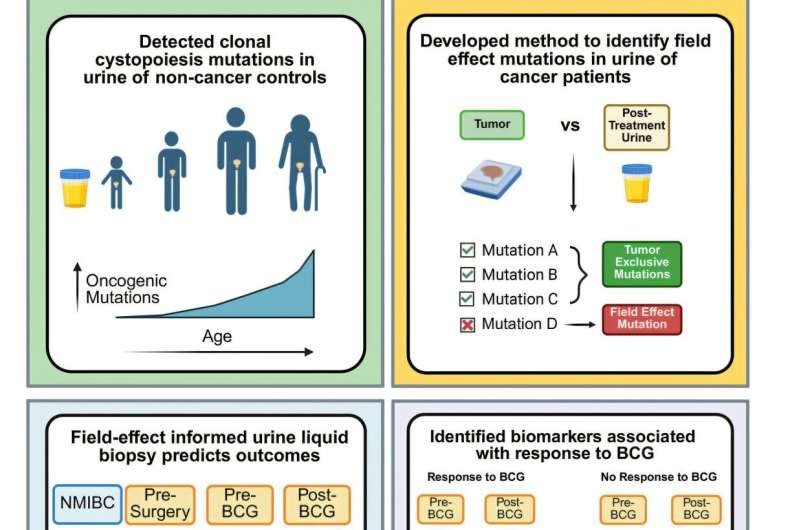
Bladder cancer arises from the lining of the bladder, the organ that stores urine, and is one of the most common cancers in the United States. Most patients are diagnosed at an early stage called non-muscle invasive bladder cancer (NMIBC), in which the tumors are confined to the inner layers of the bladder. Despite early detection, the disease frequently returns.
For the more than 60,000 patients diagnosed each year with NMIBC, the treatment path is both routine and uncertain, as bladder cancer has a high recurrence rate.
After a surgery called transurethral resection of a bladder tumor, patients with high-risk features are recommended to receive six weekly instillations of Bacillus Calmette-Guérin (BCG), a decades-old immunotherapy, in their bladder to reduce the risk of recurrence. Some patients may be cured by surgery alone, while others will relapse despite the addition of BCG. Until now, doctors have had no reliable way to tell the difference.