
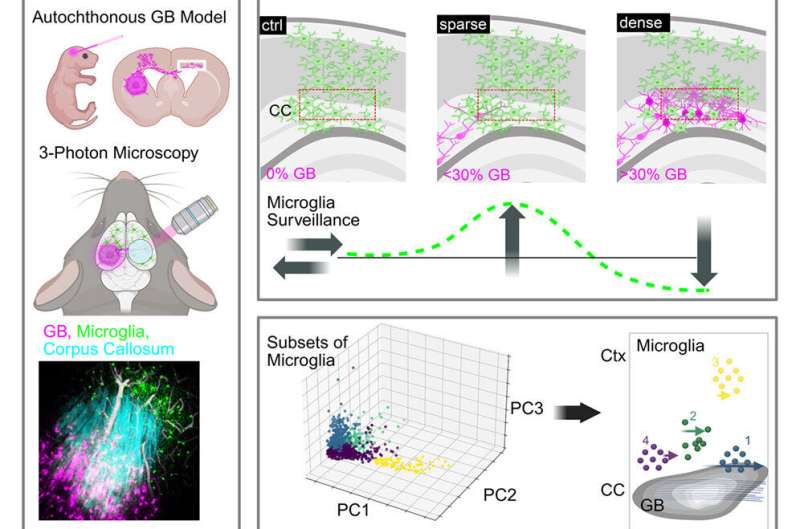
Glioblastoma, the most common and most aggressive brain tumor type in adults, remains difficult to treat because it can infiltrate surrounding brain tissue and spread far beyond the main tumor.
The current findings suggest that microglia are not passive bystanders, but actively influence both the containment and the spread of the tumor.
The scientists observed these processes by means of so-called three-photon microscopy that employs infrared light. Focus was on the “far infiltration zone,” which designates a tissue region located several millimeters away from the primary tumor.