
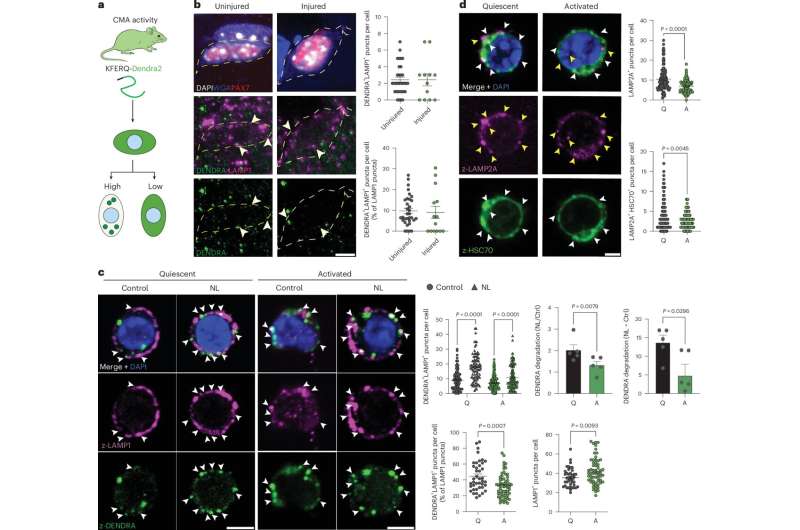
The research, conducted in animal models and human muscle samples, found that CMA preserves muscle strength and enables muscles to repair themselves and that boosting CMA activity is a potential therapeutic strategy for preventing age-related muscle decline. Both studies were led in part by Albert Einstein College of Medicine’s Ana Maria Cuervo, M.D, Ph.D., one of the world’s leading authorities on the role of CMA in health and disease.
“Sarcopenia or muscle wasting often accompanies aging, affecting half of all people over age 80 and significantly raising their risk for falls, injuries, and hospitalizations,” said Dr. Cuervo, distinguished professor of developmental & molecular biology and of medicine, the Robert and Renée Belfer Chair for the Study of Neurodegenerative Diseases, and co-director of the Institute for Aging Research at Einstein.
“One of our interesting findings is that simple lifestyle interventions, such as exercise and fasting, can boost CMA activity and help prevent age-related muscle wasting.”