
Pancreatic cancer is one of the deadliest forms of cancer worldwide, with only a 13% five-year survival rate. The disease is notoriously difficult to catch early: most patients receive their diagnosis at an advanced stage, when treatment options are limited. Current screening methods, including the widely used blood marker CA19-9, lack the sensitivity and specificity needed for reliable early detection.
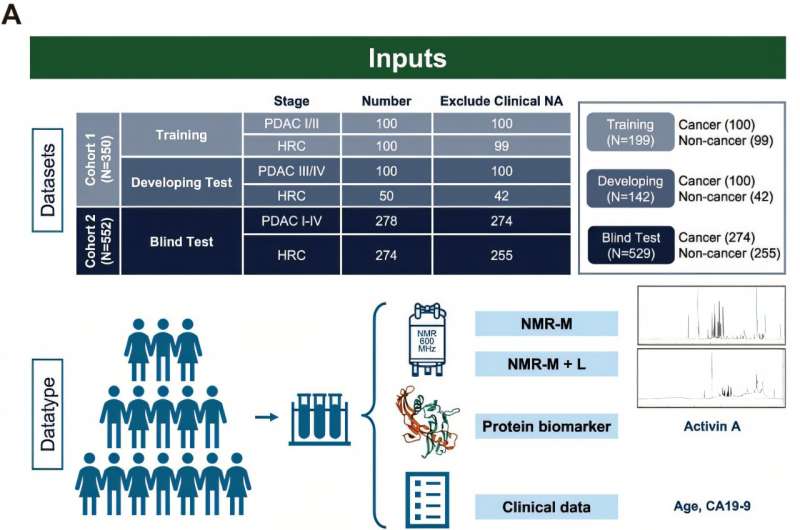
Now, a cross-disciplinary research team from National Taiwan University Hospital and Academia Sinica has developed a breakthrough diagnostic tool called PanMETAI. Published in Nature Communications, the study describes how the platform combines artificial intelligence with nuclear magnetic resonance (NMR) metabolomics—a technique that captures the unique chemical fingerprint of hundreds of metabolites in a patient’s blood—to identify pancreatic cancer with remarkable accuracy.