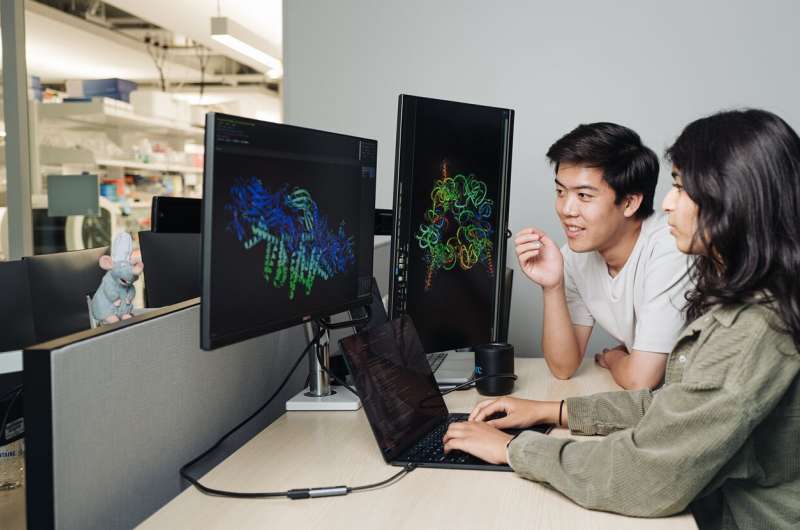
And so it is that chemical engineer Brian Hie and bioengineering graduate student Samuel King came to study bacteriophage ΦX174 (pronounced “FYE-ex-1-7-4”). Hie, an assistant professor of chemical engineering and the Dieter Schwarz Foundation Stanford Data Science Faculty Fellow, created Evo 2, a generative AI model that solves complex biological challenges by suggesting new DNA sequences. Given just the barest snippet of ΦX174 DNA, Evo 2 can write novel genomes of new phages that kill bacteria—in this case, the microbe E. coli, which can be deadly when infections turn serious.
