
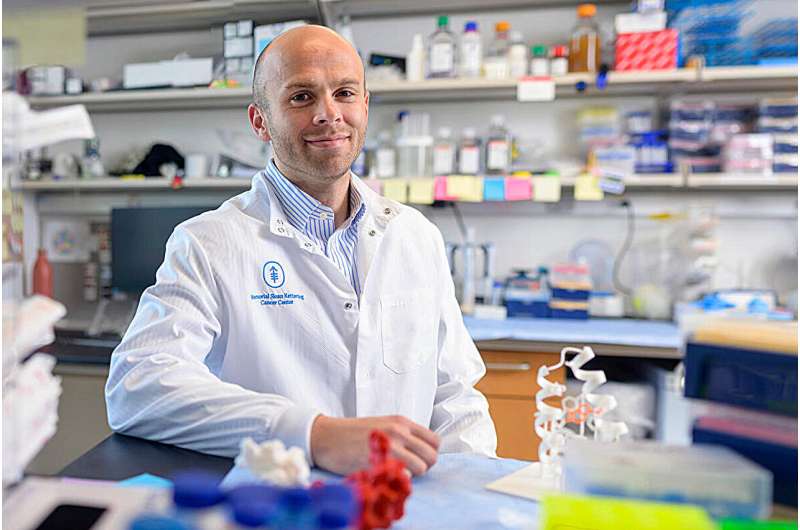
The lab of computational biologist Caleb Lareau, Ph.D., at Memorial Sloan Kettering Cancer Center (MSK), aims to broaden the impact of CAR T cell therapy and other cancer treatments by using generative artificial intelligence (AI) to design better “binders”—proteins that recognize and latch onto cancer cells, allowing the immune system to destroy them.
A proof-of-concept study, conducted in mouse models and published in Nature Biomedical Engineering, found MSK’s AI-driven approach significantly outperformed binders found on existing CAR Ts approved by the U.S. Food and Drug Administration (FDA) to target a protein called BCMA.