
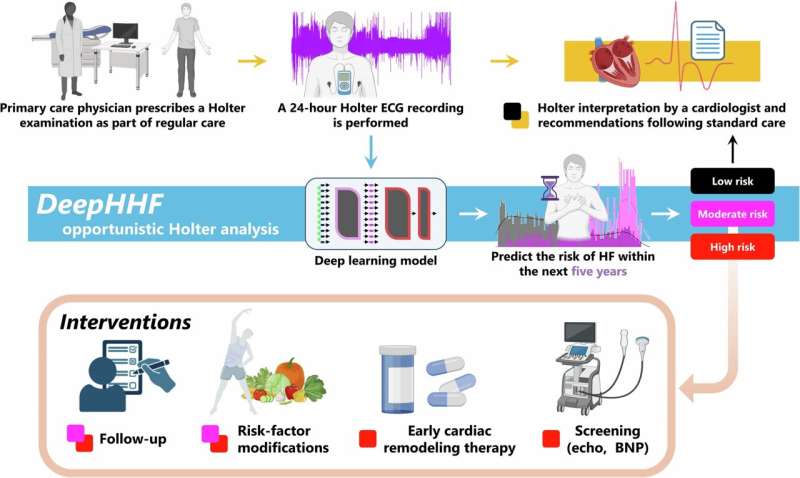
The study, published in npj Digital Medicine, was led by Prof. Joachim Behar and Ph.D. student Eran Zvuloni of the Technion, in collaboration with researchers and physicians from Rambam Health Care Campus, Shaare Zedek Medical Center, the Hebrew University of Jerusalem and Leumit Health Services.
A common and costly condition
Heart failure affects approximately 64 million people worldwide and is especially common among adults older than 65, affecting roughly 12% of this population in developed countries. The condition significantly reduces quality of life, causing symptoms such as fatigue, shortness of breath, edema and exercise intolerance, and can ultimately lead to death. As a result, there is a growing emphasis on early diagnosis, which makes it possible to initiate preventive treatments that can improve outcomes and save lives.