
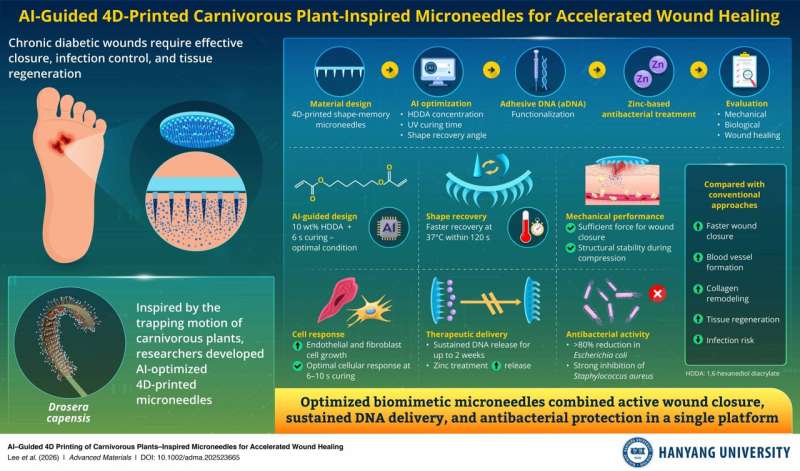
Chronic wounds remain a major health care challenge, especially for people with diabetes, who often experience delayed healing, persistent inflammation and a higher risk of infection. Traditional wound-closure methods such as sutures, staples and adhesives can help bring wound edges together, but they do not actively respond to the body’s healing process.
Scientists are therefore exploring biomaterials that can adapt to biological environments while promoting tissue repair and preventing infection.
The study combines AI, 4D printing, biomimicry, DNA nanotechnology and surface engineering in a single wound-healing platform. The paper was published in Advanced Materials.