
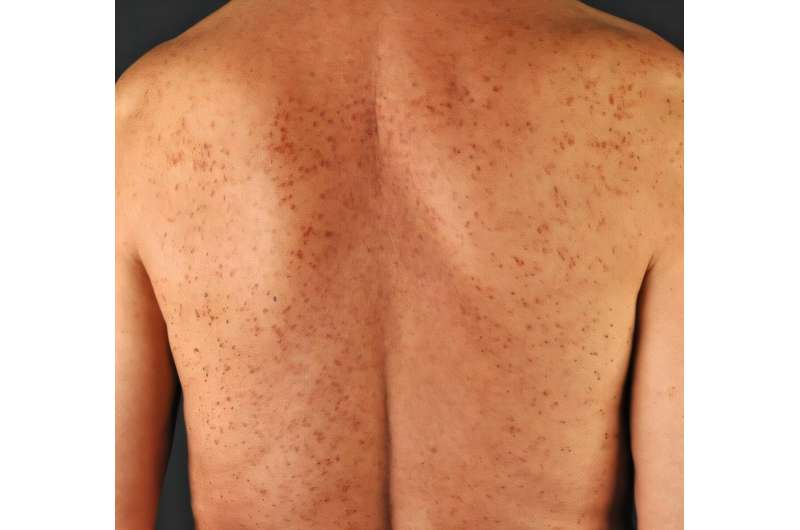
Like the burning and itching you feel when you touch a nettle: That is how allergist and dermatologist Professor Karin Hartmann describes the unpleasant feeling her mastocytosis patients experience every day. In this disease, mast cells expand in an uncontrolled manner. These immune cells release substances such as histamine, which are also secreted during allergic reactions. This can lead to itching, hives and brown skin lesions—as well as many complaints that cannot be seen on the skin, such as anaphylaxis, abdominal pain, anemia or weight loss.
The study on the skin lesions was initiated by the University of Basel and conducted in collaboration with an international research consortium and Blueprint Medicines.