
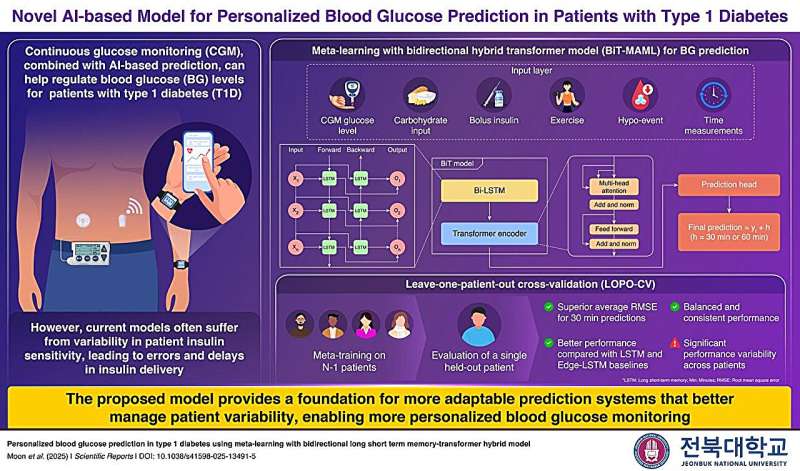
Type 1 diabetes (T1D) is an autoimmune condition in which the body’s own immune system attacks insulin-producing cells. As a result, patients with T1D must closely monitor their blood glucose (BG) levels and rely on insulin injections or pumps. Even small miscalculations or oversights can lead to unregulated blood sugar levels, leading to potentially life-threatening complications.
Continuous glucose monitoring (CGM) systems have emerged as a promising tool for predicting and forecasting BG levels. Over the past decade, researchers have explored artificial intelligence (AI) models for improving the prediction accuracy of CGM systems.
However, differences in physiology between patients and poor adaptation for new users persist to challenge the widespread adoption of this technology in real-world settings. In addition, traditional models often focus on either short-term or long-term glucose patterns, but not both.