
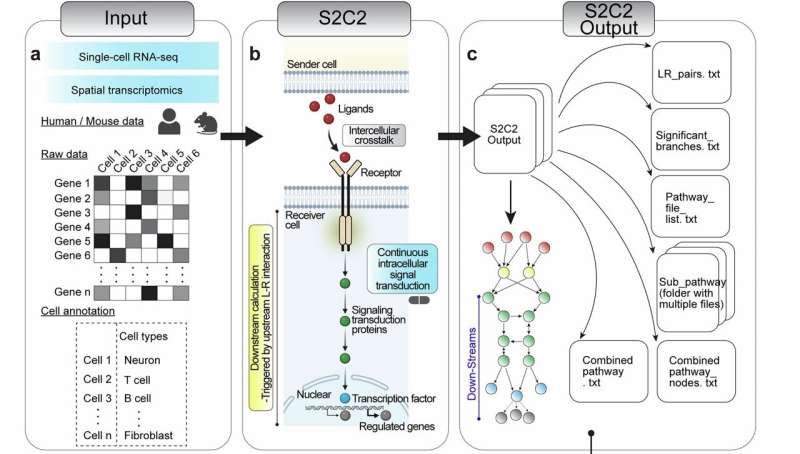
Cells in the human body are constantly “talking” to each other—sending signals that tell neighboring cells when to grow, rest, repair damage, fight infection, or stay calm. These cellular conversations form the fundamental communication network that keeps tissues and organs functioning properly. When those signals are distorted, weakened, or hijacked, they can drive disease. Their development, called co-intelligent single-cell spatial cell-cell communication (iS2C2), is described in Signal Transduction and Targeted Therapy.
“Understanding a disease means determining how these cellular conversations have gone wrong and how to repair them,” said Stephen Wong, Ph.D., the John S. Dunn Presidential Distinguished Chair in Biomedical Engineering at Houston Methodist, and the study’s lead author. “In Alzheimer’s disease, for example, disrupted signaling may contribute to inflammation and brain damage. In cancer, abnormal cell-to-cell communication can lead to tumor growth, spread, and resistance to treatment.”