
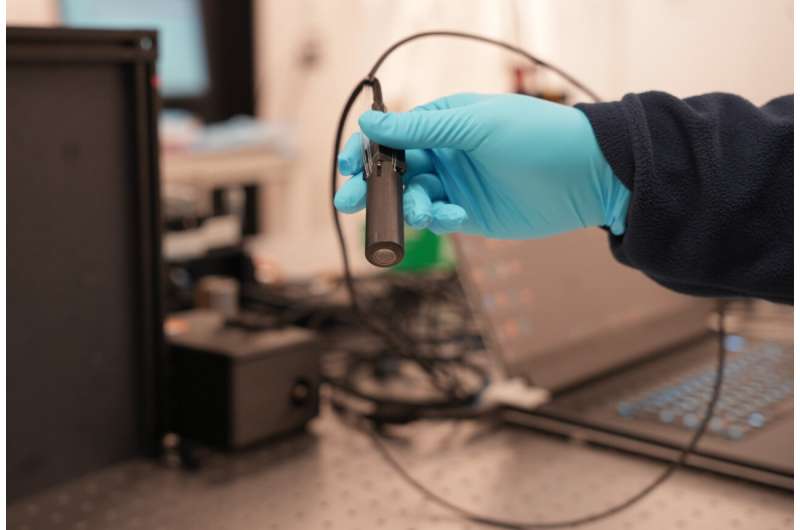
The device, called PrecisionView, is a handheld endomicroscope that overcomes limitations in medical imaging by combining advanced optics with deep learning. The system enables clinicians to visualize both subcellular structures and underlying blood vessels across large tissue areas without the need for invasive biopsies.
“Early detection is one of the most critical factors in improving cancer outcomes, but today’s tools often force clinicians to choose between detail and coverage,” said corresponding author Rebecca Richards-Kortum, the Malcolm Gillis University Professor at Rice and co-director of the Rice360 Institute for Global Health Technologies. “With PrecisionView, we no longer have to make that trade-off—we can see both clearly and in real time.”