
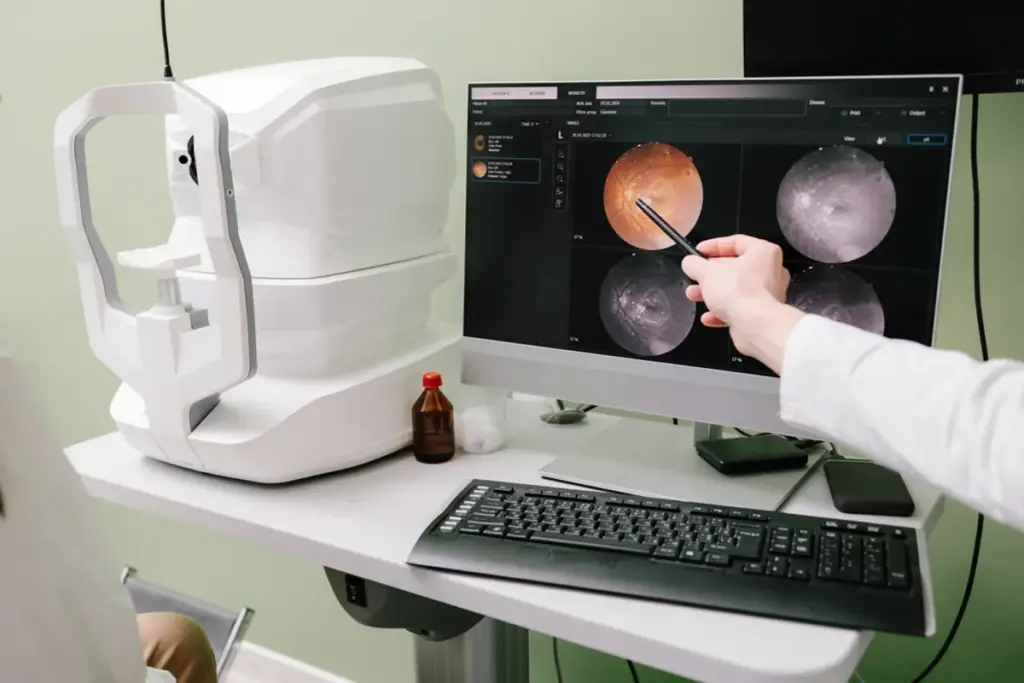
It might seem like an unlikely connection. But the retina — the light-sensitive tissue at the back of the eye — may also reflect how the rest of the body is aging, including parts that seem completely unrelated to vision, like the skeleton.
In a new study published in PLOS Digital Health, researchers found that people whose retinas appeared biologically “older” were more likely to have lower bone density, higher fracture risk, and a greater chance of developing osteoporosis later in life.
Osteoporosis affects nearly 20 percent of people globally and is often called a silent disease because many people do not realize their bones are weakening until they suffer a fracture. The standard screening test, known as a DEXA scan, can also be expensive and difficult to access for people who do not yet appear to be high risk. Researchers say retinal scans could someday help flag osteoporosis risk earlier and more easily.