
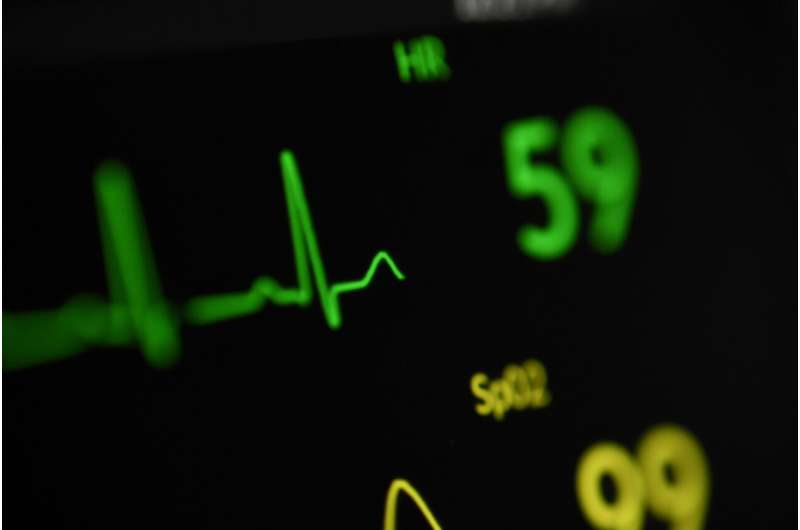
Each year in the U.S., more than 300,000 people die from sudden cardiac arrest, a condition in which the heart’s electrical system malfunctions without warning. The medical emergency can kill both high-risk older adults and young athletes with no history of heart issues, and while internal defibrillators that shock the heart can save lives, figuring out who actually needs one remains a high-stakes guessing game.
Using more than 440,000 EKGs from Sweden paired with information from death certificates, researchers trained an artificial intelligence model to analyze the spikes and waveforms produced by the heart’s electrical currents. They fed the model scans from healthy people, at-risk patients and those who later suffered cardiac death until it recognized waveform patterns in people who later suffered sudden cardiac death. Over multiple years, researchers tested the model on thousands of other patient files from both the U.S. and Taiwan.