
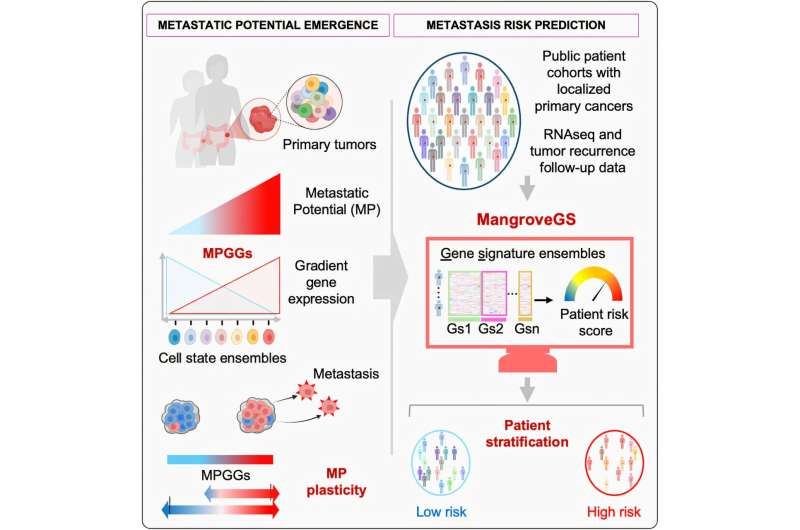
Using cells from colon cancers, scientists at the University of Geneva (UNIGE) have pinpointed the criteria that influence the risk of metastasis, and identified gene expression signatures that can be used to assess its probability. The team then created an artificial intelligence tool (MangroveGS) capable of transforming these data into predictions for many cancers with unparalleled reliability.
Their results, published in Cell Reports, pave the way for more precise care and the discovery of new therapeutic targets.
“The origin of cancer is often attributed to ‘anarchic cells,'” explains Ariel Ruiz i Altaba, professor in the Department of Genetic Medicine and Development at the UNIGE Faculty of Medicine, who led the study. “However, cancer should rather be understood as a distorted form of development.” Indeed, under the effect of genetic and epigenetic changes, programs that were suppressed during the development of the organism and tissues are reactivated, giving rise to a tumor.