
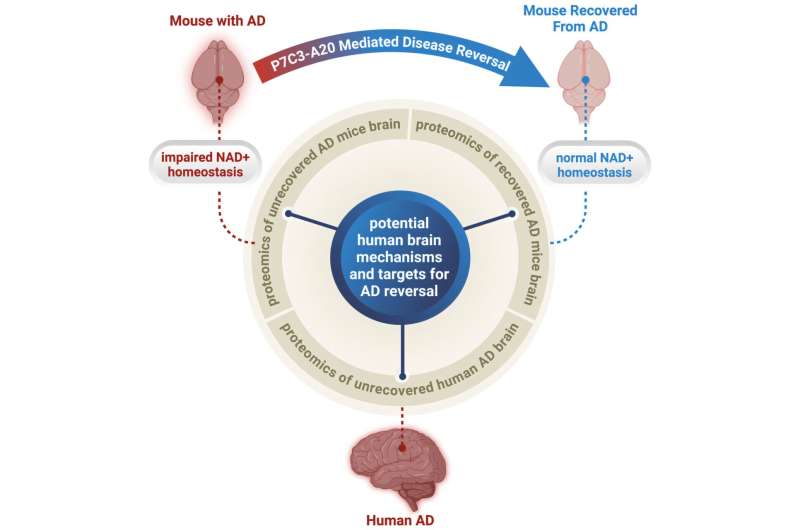
The study, led by Kalyani Chaubey, Ph.D., from the Pieper Laboratory, is published in Cell Reports Medicine.
How NAD+ is linked to Alzheimer’s
Through studying diverse preclinical mouse models and human AD brains, the team showed that the brain’s failure to maintain normal levels of a central cellular energy molecule, NAD+, is a major driver of AD, and that maintaining proper NAD+ balance can prevent and even reverse the disease.
NAD+ levels decline naturally across the body, including the brain, as people age. Without proper NAD+ balance, cells eventually become unable to execute critical processes required for proper functioning and survival.