
In animal models, the treatment also improved cognitive performance in memory tests. The team was led by researcher José Vicente Sánchez Mut at the Institute for Neurosciences (IN), a joint center of the Spanish National Research Council (CSIC) and the Miguel Hernández University of Elche (UMH), together with researcher Johannes Gräff at the École Polytechnique Fédérale de Lausanne (EPFL).
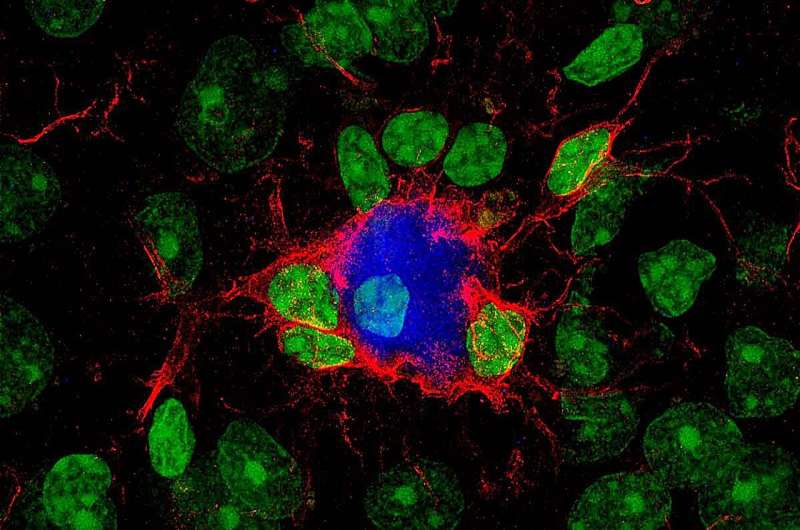
Alzheimer’s disease is characterized, among other factors, by the accumulation of beta-amyloid plaques and by the progressive deterioration of microglia, the immune cells responsible for clearing these toxic deposits from the brain. As the disease progresses, these cells lose part of their protective capacity and contribute to neuronal damage. In this study, the researchers found that OLE, a molecule derived from the PM20D1 gene, helps restore microglia to a more protective state: the cells move toward the plaques and enclose them, forming a kind of barrier around the deposits that limits their interaction with neurons and reduces their toxic impact on brain tissue.