
FDA grants 510(k) clearance for Allevion Medical’s Vantage system
Vantage’s intuitive three-step workflow, locate, dilate, decompress, enables physicians to perform procedures with consistency.

Vantage’s intuitive three-step workflow, locate, dilate, decompress, enables physicians to perform procedures with consistency.

UCLA scientists have developed a simple and cost-effective blood test that, in early studies, shows promise in detecting multiple cancers, various liver conditions and organ abnormalities simultaneously by analyzing DNA fragments circulating in the bloodstream.
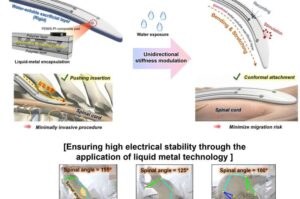
What if chronic diseases, which are difficult to treat with medicine alone, could be managed with electricity? As “neuromodulation”—a technology that restores bodily balance by sending signals directly to nerves—gains attention, a Korean research team has brought this possibility one step closer to reality.
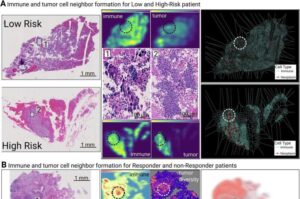
Results of a new study conclude that a pathology tool powered by artificial intelligence can predict whether a patient with extensive-stage small cell lung cancer will respond to platinum-based chemotherapy—before treatment has begun, and without additional biopsies. That means patients can avoid treatments that are unlikely to help them, have a chance to enroll earlier in clinical trials of newer drugs, and may get a clearer picture of their prognosis.
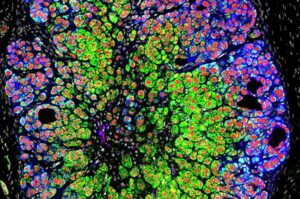
Sitting above each kidney are two small endocrine glands about the size of walnuts. These are the adrenal glands, responsible for producing hormones that help control some of the body’s most critical functions. Among these hormones, cortisol is particularly critical for survival. Often referred to as the “stress hormone,” it helps the body adapt to a wide range of challenges—both emotional and physical, such as trauma or infection—by regulating overall metabolism. Despite its central role in stress and endocrine biology, how the adrenal gland is built and how it functions remains poorly understood.
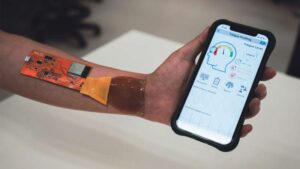
About one in three employees in Singapore report feeling burnt out—one of the highest rates globally. Burnout and chronic fatigue carry a substantial economic cost and pose serious risks in professions where alertness is critical. Yet diagnosing fatigue and related mental health conditions today relies largely on self-reported questionnaires, which tend to be subjective, intermittent, and poorly suited to real-time evaluation.

A novel vaccine platform has been developed to induce broad, protective immunity against numerous influenza virus infections, showing promise as an effective mucosal vaccine strategy, according to a study published by researchers in the Institute for Biomedical Sciences at Georgia State University.
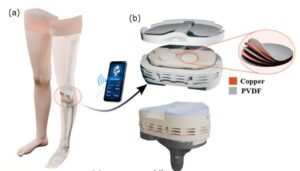
If you have a knee replacement, imagine pointing your phone at your knee and pulling up an app that tells you how much stress the artificial joint is experiencing. Knowing the activities that cause the biggest problems—which can lead to a second replacement surgery—would be invaluable. Research led by Binghamton University is closer to making this technology a reality.

Biomedical researchers have designed an injectable microgel to help reduce bleeding in infants who require surgical care. In an animal model, the engineered microgel reduced bleeding by at least 50%. The paper, “Hemostatic B-Knob Triggered MicroGels (BK-TriGs) to Address Bleeding in Neonates,” is published in the journal Science Advances.

For patients with heart failure, blood pumps can be lifesaving. But the very forces that sustain circulation can also harm it, damaging red blood cells through hemolysis and compromising the body’s oxygen supply. Now, supercomputer simulations are revealing how red blood cells deform under stress, offering new insights that could lead to safer, more effective blood pump designs.