
FDA clears Intuitive curved vessel sealer device for surgical robot
Intuitive Surgical (Nasdaq: ISRG)+
announced today that the FDA cleared the latest advanced energy instrumentation for its da Vinci systems.

Intuitive Surgical (Nasdaq: ISRG)+
announced today that the FDA cleared the latest advanced energy instrumentation for its da Vinci systems.

JERSEY CITY, N.J. and OR YEHUDA, Israel, July 10, 2025 /PRNewswire/ — Synchrony Medical, a medical technology company dedicated to advancing respiratory care, today announced that it has received U.S. Food and Drug Administration (FDA) 510(k) clearance to market its LibAirty™ Airway Clearance System in the United States.

OREM, Utah, July 10, 2025 /PRNewswire/ — Dymicron®, a privately held medical device company pioneering advanced spinal technologies, today announced that the United States (U.S.) Food and Drug Administration (FDA) has granted Investigational Device Exemption (IDE) approval to begin a pivotal clinical study of the Triadyme®–C cervical artificial disc.
The FDA has granted 510(k) clearance to the TaviPilot AI software developed by Caranx Medical, according to company officials.

Brazilian researchers have discovered chemical compounds in marine sponges that have the potential to eliminate the malaria parasite, including strains that are resistant to conventional antimalarial drugs. The research results were published in the journal ACS Infectious Diseases.
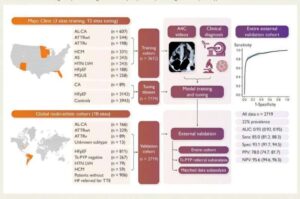
An artificial intelligence (AI) model developed by Mayo Clinic and Ultromics, Ltd., an AI echocardiography company based in Oxford, England, is highly accurate in screening for cardiac amyloidosis, a rare and progressive type of heart failure, according to a new study. The model is the first and only AI tool of its kind.

A new skin-like sensor developed by an international team led by researchers at Penn State could help doctors monitor vital signs more accurately, track healing after surgery and even help patients with bladder control issues.
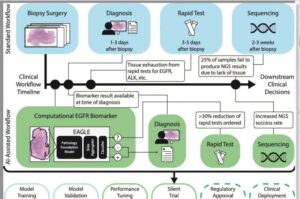
A new study by researchers at the Icahn School of Medicine at Mount Sinai, Memorial Sloan Kettering Cancer Center, and collaborators, suggests that artificial intelligence (AI) could significantly improve how doctors determine the best treatment for cancer patients—by enhancing how tumor samples are analyzed in the lab.
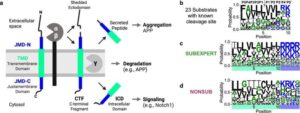
Researchers from DZNE, Ludwig-Maximilians-Universität München (LMU), and Technical University of Munich (TUM) have found that the enzyme “gamma-secretase”—implicated in Alzheimer’s disease and cancer—selects its reaction partners according to a complex scheme of molecular features.

Revolutionary Implant Integrates Sensor-Driven Technology and Cloud Connectivity to Enhance Hearing Outcomes and Patient Monitoring