
Philips unveils AI-powered heart valve repair solution for TEER procedures
Philips (NYSE: PHG)+ today announced the introduction of DeviceGuide, an AI-powered tracking solution for interventional cardiology.

Philips (NYSE: PHG)+ today announced the introduction of DeviceGuide, an AI-powered tracking solution for interventional cardiology.
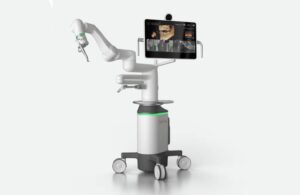
Neocis announced today that it launched Yomi S, its next-generation robotic platform for dental implant surgery.

1nhaler announced today that it secured approximately $2 million (£1.5 million) in seed funding to support its inhaler technology.
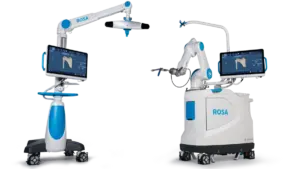
Competing with companies including Stryker and J&J, Zimmer has moved to strengthen its position by developing an updated robot.
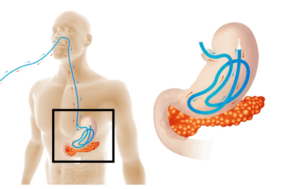
RALEIGH, N.C., Nov. 17, 2025 /PRNewswire/ — Arctx Medical, Inc. (“Arctx,” “the Company”), a clinical-stage medical device company, announced today that it has achieved two additional significant milestones:
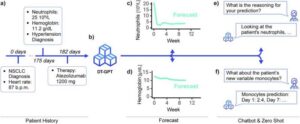
A new artificial intelligence tool that can create virtual representations of patients and predict individual health trajectories has been hailed a potential gamechanger for the clinical trial sector.

FRANKLIN LAKES, N.J., Nov. 17, 2025 /PRNewswire/ — BD (Becton, Dickinson and Company) (NYSE: BDX), a leading global medical technology company, today announced that the Conformité Européenne (CE) Marked BD Onclarity™ HPV Assay for the BD COR™ System and the BD Viper™ LT System have been accepted for the World Health Organization (WHO) list of prequalified in vitro diagnostic products, further expanding access to high-quality cervical cancer screening tools in low- and middle-income countries.
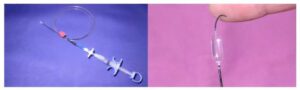
Researchers at the University of Osaka have engineered a novel technique, balloon-assisted bronchoscope delivery (BDBD), to guide endoscopes to small, early-stage lung cancers hidden deep within the periphery of the lungs.

A new discovery from the lab of YouYang Zhao, Ph.D., from Stanley Manne Children’s Research Institute at Ann & Robert H. Lurie Children’s Hospital of Chicago, opens promising new directions for treatment of life-threatening lung injury caused by sepsis.
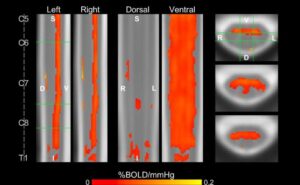
Northwestern Medicine investigators have developed a new imaging approach to more accurately assess blood flow in the spinal cord, a method that could be used to better inform treatment for neurological diseases and injuries, as described in a recent study published in Scientific Reports.