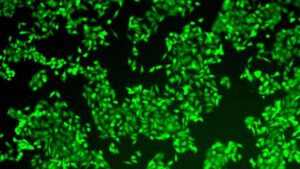
Short-circuiting pancreatic cancer: A potential RNA therapy
Cold Spring Harbor Laboratory (CSHL) Professor Adrian Krainer’s lab discovered how the protein SRSF1 along with AURKA and MYC, jumpstart PDAC tumor development.

Cold Spring Harbor Laboratory (CSHL) Professor Adrian Krainer’s lab discovered how the protein SRSF1 along with AURKA and MYC, jumpstart PDAC tumor development.

CMR Surgical announced today that it received CE mark and U.K. approval for its Versius surgical robot in pediatric surgery.
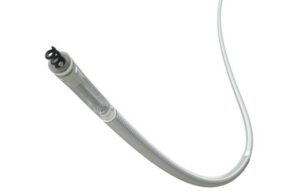
Medtronic this week launched its OmniaSecure defibrillation lead in the U.S., describing it as the world’s smallest.
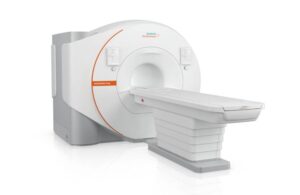
Siemens Healthineers announced today that it received FDA clearance for its 70cm bore Magnetom Flow magnetic resonance imaging (MRI) platform.

Some parts of our bodies bounce back from injury in fairly short order. The outer protective layer of the eye—called the cornea—can heal from minor scratches within a single day. The brain is not one of these fast-healing tissues or organs.
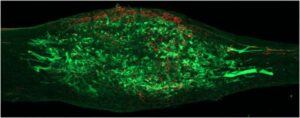
When a house catches on fire, we assume that a smoke alarm inside will serve one purpose and one purpose only: warn the occupants of danger. But imagine if the device could transform into something that could fight the fire as well.

SEOUL, South Korea, Jan. 8, 2026 /PRNewswire/ — Sky Labs (CEO Jack Byunghwan Lee) announced on the 8th that its ring-type blood pressure monitor, ‘CART PLATFORM,’ recently obtained the European Union’s Medical Device Regulation (CE-MDR) certification.
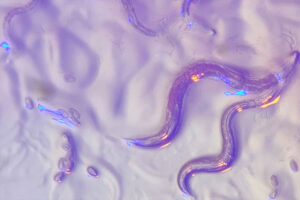
Time and again, an unassuming roundworm has illuminated aspects of biology with major consequences for human health.
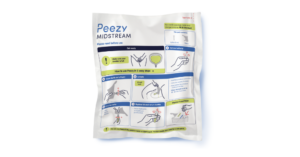
Peezy Midstream is available to Primary Care Providers, showing excellent clinical evidence around reduced false-positives and reduced specimen contamination evidenced by a Public Health Wales GP study, showing a 66% saving on lab spend.

Naox Technologies has received FDA 501(k) clearance for its wired electroencephelography (EEG) earphones, Naox Link.