
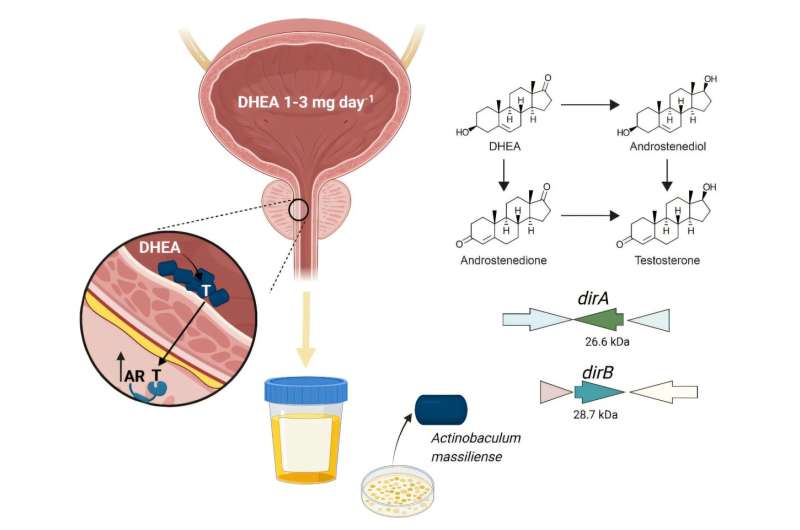
The finding does not mean that the bacterium causes prostate cancer, nor does it show that testosterone produced by bacteria reaches tumors or changes the course of disease. It does, however, reveal a previously unknown microbial route to a hormone that is central to prostate biology, raising new questions about whether the microorganisms living near the prostate could help shape its chemical environment.
Published in Nature Communications, the study brought together experts in microbiology, cancer biology, chemistry, genomics and computational physics. Researchers in Auburn University’s Department of Physics contributed computational structural biology that helped explain, at the atomic level, how the newly discovered bacterial machinery works.