
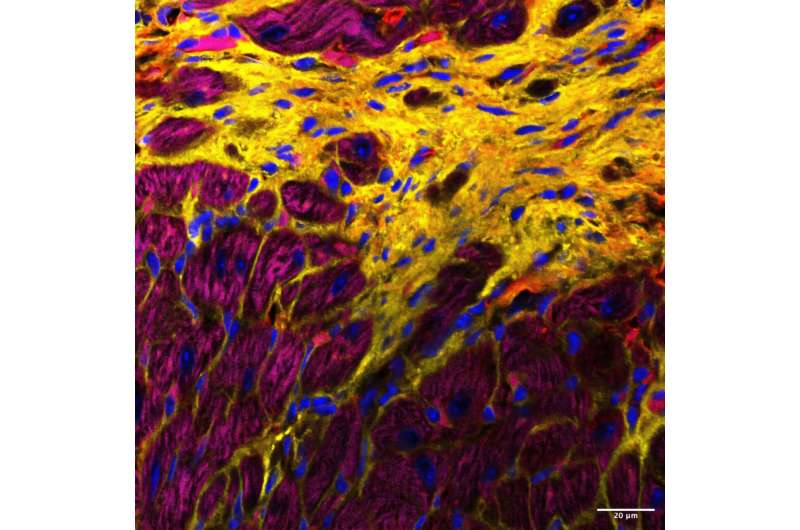
Reducing the level of this protein, called AEBP1, after a heart attack or prolonged hypertension could be a promising therapy to prevent heart failure development.
“For the first time, we show that if we suppress AEBP1, it prevents heart failure progression and preserves cardiac function,” says Thirupura Shankar, Ph.D., a postdoctoral researcher in the Nora Eccles Harrison Cardiovascular Research Training Institute at University of Utah Health and first author on the study.