
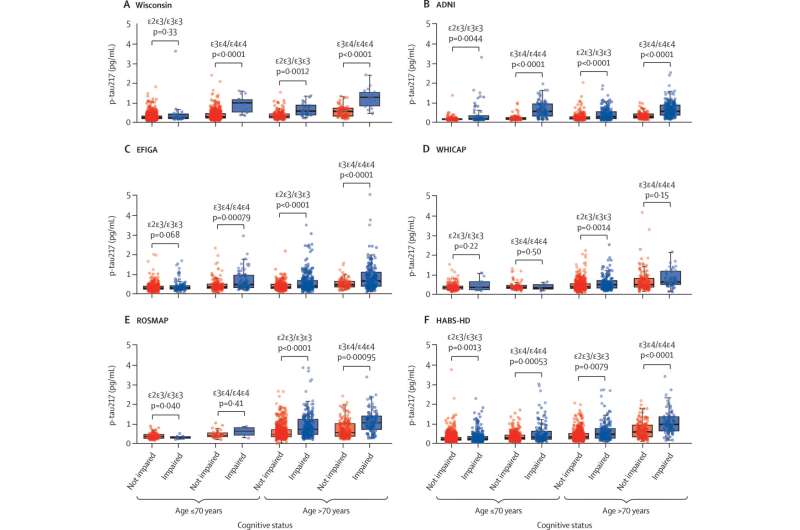
The study, published Sept. 9 in The Lancet Neurology, analyzed data from roughly 8,500 participants from different ethnic backgrounds. It found that combining two Alzheimer’s tests—a blood test that measures a biomarker known as p-tau217 and a genetic test that looks for a high-risk variant of the APOE gene—can predict symptom onset in people who are not currently experiencing symptoms.
Once p-tau217 levels become elevated, the study found, people with one or more copies of the high-risk APOE4 gene are likely to develop symptoms in 3–4 years, while people with other APOE variants are likely to develop symptoms in 5–6 years.