
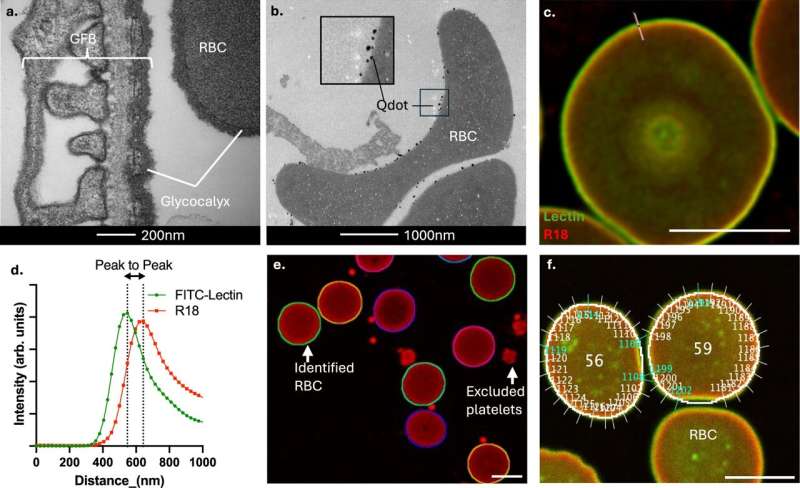
Previously, detecting this type of vascular damage relied on invasive tissue biopsies and advanced microscopy techniques. In this latest development, the Bristol team demonstrate a new way to identify damage to the blood vessel lining. They do this by tracking changes in the sugar and protein-rich coating on the surface of these vessels, known as the glycocalyx.
Glycocalyx
This thin, protective layer lines the inside of our blood vessels, but it is highly sensitive and can change rapidly at the earliest signs of illness. The glycocalyx also acts as a crucial barrier, regulating what moves in and out of the bloodstream and directing immune cells to where they are needed.
When the glycocalyx becomes damaged, researchers show that it serves as the earliest marker of disease.