
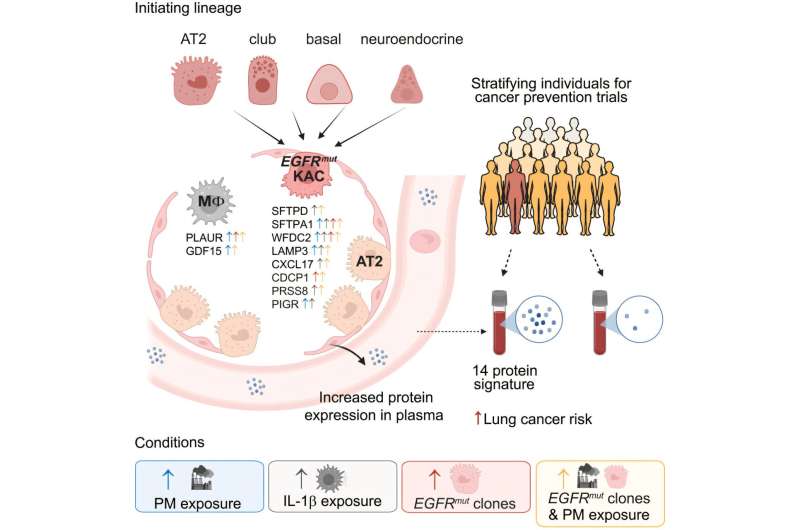
As we age, our cells acquire cancer-causing mutations, but mutations alone are rarely enough to start a tumor. An environmental trigger, such as exposure to air pollution from sources such as combustion engines, coal burning and cigarette smoke may be needed to tip mutant cells into cancer. Currently, lung cancer screening is offered only to people over a certain age who have previously smoked, missing never-smokers and individuals exposed to high levels of pollutants who may also be at risk of the disease.
Building on their previous research showing that air pollution can drive cancer by causing inflammation and waking up dormant cells with mutations, the research team, which is supported by the National Institute for Health and Care Research UCLH Biomedical Research Centre, aimed to find a signature of inflammation that can more accurately predict lung cancer, moving beyond risk based purely on age and lifestyle factors, such as tobacco exposure.