
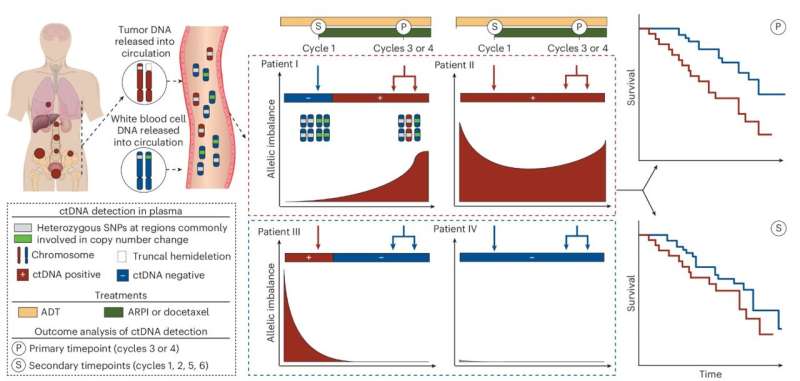
The study, published in Nature Cancer, shows that men could switch or intensify treatment much sooner than is currently possible if their cancer is not responding to treatment, potentially saving precious time and improving outcomes for patients.
Researchers found that detecting tiny fragments of tumor DNA in the blood can reveal whether prostate cancer is continuing to grow, even when current tests show little change. This can allow clinicians to greatly accelerate treatment personalization and clinical research.
About 10,000 men are diagnosed with advanced prostate cancer every year, but currently there is no way to quickly tell which men will respond well to hormone therapy alone, or which will need additional treatments like chemotherapy.