
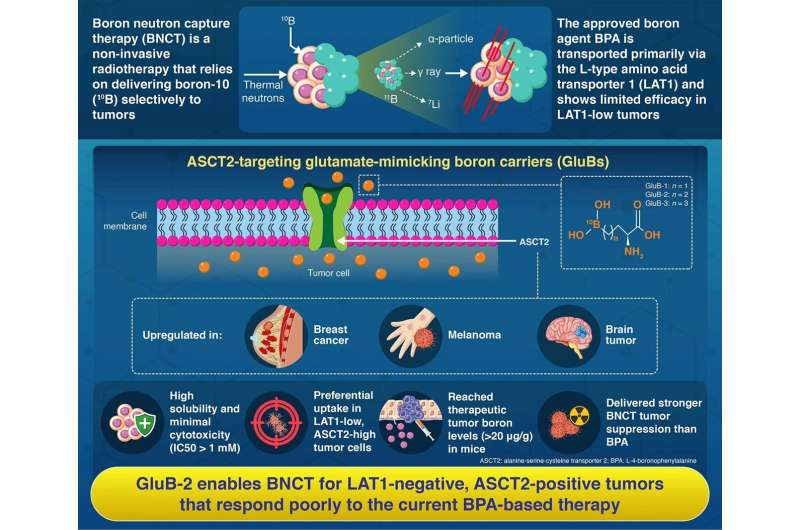
Boron neutron capture therapy (BNCT) is a non-invasive form of radiotherapy that works by delivering enough boron-10 directly to tumor cells. When these boron-loaded cells are exposed to low-energy neutrons, they release highly localized bursts of energy that destroy the cancer cells while largely sparing nearby healthy tissue.
In current clinical practice, the most widely used boron carrier is L-4-boronophenylalanine (BPA). BPA enters tumors primarily through the L-type amino acid transporter 1 (LAT1), a protein that is overexpressed in many cancers. However, tumors with low LAT1 expression respond poorly, leaving a significant group of patients without effective treatment options and creating an urgent need for boron agents that utilize alternative uptake pathways.